

It’s a shame that Leonard Cohen is mostly famous for other people’s covers of his classic song “Hallelujah.” While that song is wonderful and many covers of it are great, Cohen has countless other works of seemingly limitless meaning and beauty as well.
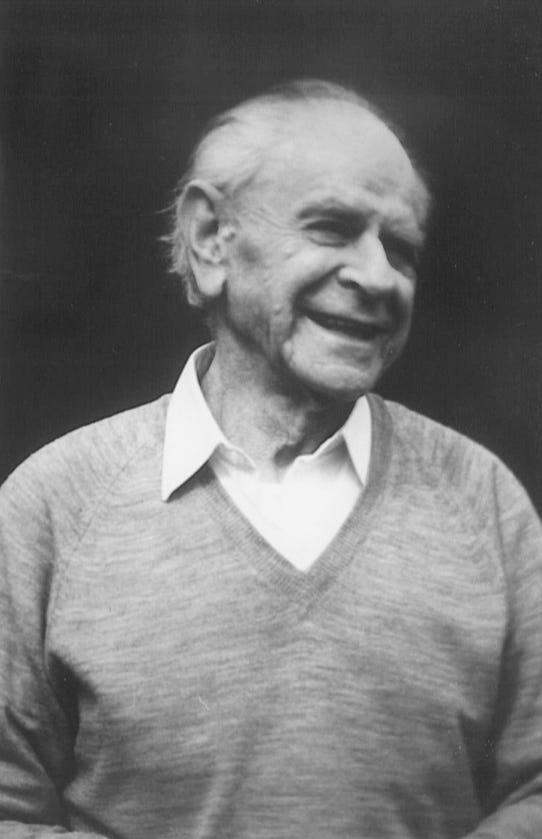
One example is the song “Anthem” from the 1992 album The Future. As an obsessive contemplator of the great philosopher of science Karl Popper, I find the lyrics of “Anthem” strikingly salient. While Cohen thought of them in a more spiritual context, they map quite well onto Popper’s model of the all-important growth of scientific knowledge.
Consider the chorus:
Ring the bells that still can ring
Forget your perfect offering
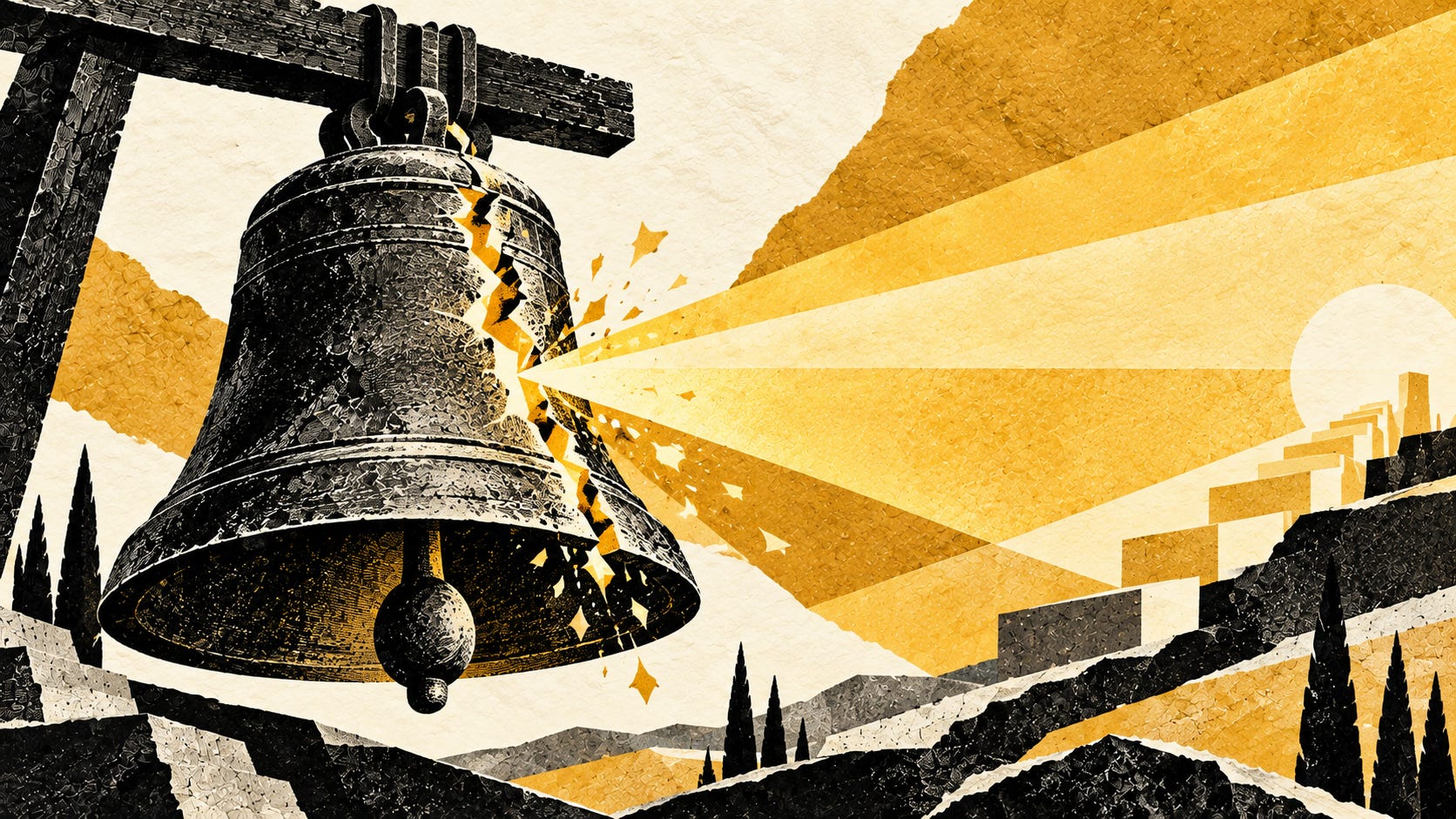
There is a crack, a crack in everything
That’s how the light gets in
These lyrics appear to reference Kabbalistic mysticism. That is the interpretation of Elliot Wolfson, Distinguished Professor of Religion and Chair of Jewish Studies at University of California, Santa Barbara, who spoke with Cohen about the Kabbalistic influences on his music. “…the image of light peering through the crack reflects the kabbalistic notion of the breaking of the vessels promulgated by Isaac Luria and his disciples, Wolfson explains. “Briefly put, according to Lurianic mythology, the cataclysmic break within the godhead facilitated the dissemination of light, the scattering of sparks in the world of particularity.”


To my eye, this way of thinking about imperfection being the gateway to a more enlightened place maps interestingly onto the philosophy of Karl Popper.
Popper criticized traditional inductivist empiricism and, in particular, the verificationism associated with logical positivism—the attempt to establish theories as true through positive empirical evidence. Popper argued that a theory can never be verified, because all sources of knowledge are fallible and ultimately based on conjecture.
Hence his proposal of the now-widespread (although still debated) “criterion of falsifiability,” according to which a scientific theory must expose itself to possible refutation. On Popper’s account, we make progress in science by falsifying bad theories, but never by conclusively verifying good ones. We know that a theory is good to the extent that it continues outperforming its competitors in an unbounded series of tests.
Popper criticized a traditional strain of empiricism according to which observation gives us access to manifest truth, with false dogmas, prejudices, and willful blindness preventing us from seeing it clearly. He claimed that even our sense data can be reasonably interpreted in myriad ways, and that any interpretation is necessarily theory-laden and always based on fallible conjecture.

While this epistemic framework may initially sound bleak, Popper explains that it is the basis of potentially infinite progress. While verification of a theory would constitute a dead end in the growth of knowledge, falsificationism offers boundless improvement. Popper summarizes the view well in a passage from Volume 2 of his 1945 book The Open Society and Its Enemies:
First, although in science we do our best to find the truth, we are conscious of the fact that we can never be sure whether we have got it. We have learned in the past, from many disappointments, that we must not expect finality. And we have learned not to be disappointed any longer if our scientific theories are overthrown; for we can, in many cases, determine with great confidence which of the two theories is the better one. We can therefore know that we are making progress; and it is this knowledge that to most of us atones for the loss of the illusion of finality and certainty. … Thus we can say that in our search for truth, we have replaced scientific certainty by scientific progress.
I find “Anthem” especially compelling because I find this way of thinking reflected in it.
To me, the lines “Ring the bells that still can ring / Forget your perfect offering” suggest Popper’s admonition that we do our best to find the truth, even though we should not expect certainty or finality.
The claim that “There is a crack in everything / That’s how the light gets in” reflects Popper’s view that no theory can be treated as infallible and that any accepted theory must therefore remain open to criticism and possible replacement, but that this is a wonderful thing because it leaves open the possibility of unbounded progress and improvement.