

Andrew Wilson has become one of the most prominent online commentators defending what he calls “Christian ethics.” His debate with Candice Owens earlier this month (which has already accrued over 11 million views), his multiple recent appearances on the Joe Rogan podcast, and countless other high-profile appearances have brought his arguments to the forefront of popular discourse.
In a recent interview he exposed a fundamental flaw in his version of “Christian ethics,” presenting a fatal weakness of his worldview as a strength. He was recounting his previous debate with the secular humanist Matt Dillahunty and contrasting his view with Dillahunty’s secular humanism. “The problem with this ideology is it’s changed,” Wilson argues. “So he [Dillahunty] was reading from the Secular Human Manifesto III. So it’s on its third revision now.”
Wilson’s problem with this is that it’s an evolving moral standard. He argues to the secular humanist:
What you’re saying is that what you consider moral today, you’re not going to consider moral tomorrow. That tells me that you’re saying to me you don’t know what is moral and what is not. The Christian has the opposite approach. They’re saying, “What was moral yesterday is still moral today, and what’s still moral today is what’s still going to be moral a thousand years from now, two thousand years from now.” Because that’s the teaching they’re basing it on.
Wilson has pulled a sleight of hand there. He has conflated moral truth and the present understanding of moral truth. Secular humanists don’t necessarily claim, as Wilson implies, that moral truth is constantly evolving. They claim that their understanding of moral truth is constantly evolving.
Secular humanists, as I understand their worldview, indeed admit that their moral standards will change over time because they will, hopefully, improve. They admit fallibility in their ever-evolving search for truth, just like scientists continue to improve their ever-incomplete understanding of the natural world. Scientists admit they lack complete knowledge of the natural world, and secular humanists apparently admit they lack complete knowledge of morality. These admissions are features of the scientific and secular humanistic worldviews, not bugs. Since there is no infallible knowledge of nature or morality yet demonstrated, improving incomplete knowledge is an indispensable goal of any worthwhile worldview.
Wilson begins by correctly noting secular humanism’s moral fallibilism, but then conflates fallibilism with subjectivism. Contrary to what Wilson implies, secular humanism does not necessarily deny that moral truth followed the same principles thousands of years ago that it follows today. But secular humanists generally would deny that anyone had a perfect understanding of moral truth thousands of years ago.
Wilson’s conclusion frames the debate as moral objectivity versus moral subjectivity, but it is actually moral infallibilism versus moral fallibilism. And if this is the debate, Wilson can only win by demonstrating his worldview to be infallible. Otherwise, his worldview could improve by evolving and offering new prescriptions tomorrow, just like secular humanism. Even if he possesses an unchanging, infallible revelation while remaining a fallible interpreter of it, this would not be sufficient to preserve his worldview because then he would sometimes revise his moral beliefs on the basis of new interpretation. Once he grants that, he must grant that revision is not evidence against a moral framework.
The Greek philosopher Xenophanes of Colophon articulated the fallibilist alternative to Wilson’s certitude in the 6th century BC, and Xenophanes’s words still hold up today. As translated by philosopher Karl Popper in the 1963 book Conjectures and Refutations:
The gods did not reveal, from the beginning,
All things to us; but in the course of time,
Through seeking, men find that which is the better. . .
These things are, we conjecture, like the truth.But as for certain truth, no man has known it,
Nor will he know it; neither of the gods,
Nor yet of all the things of which I speak.
And even if by chance he were to utter
The final truth, he would himself not know it:
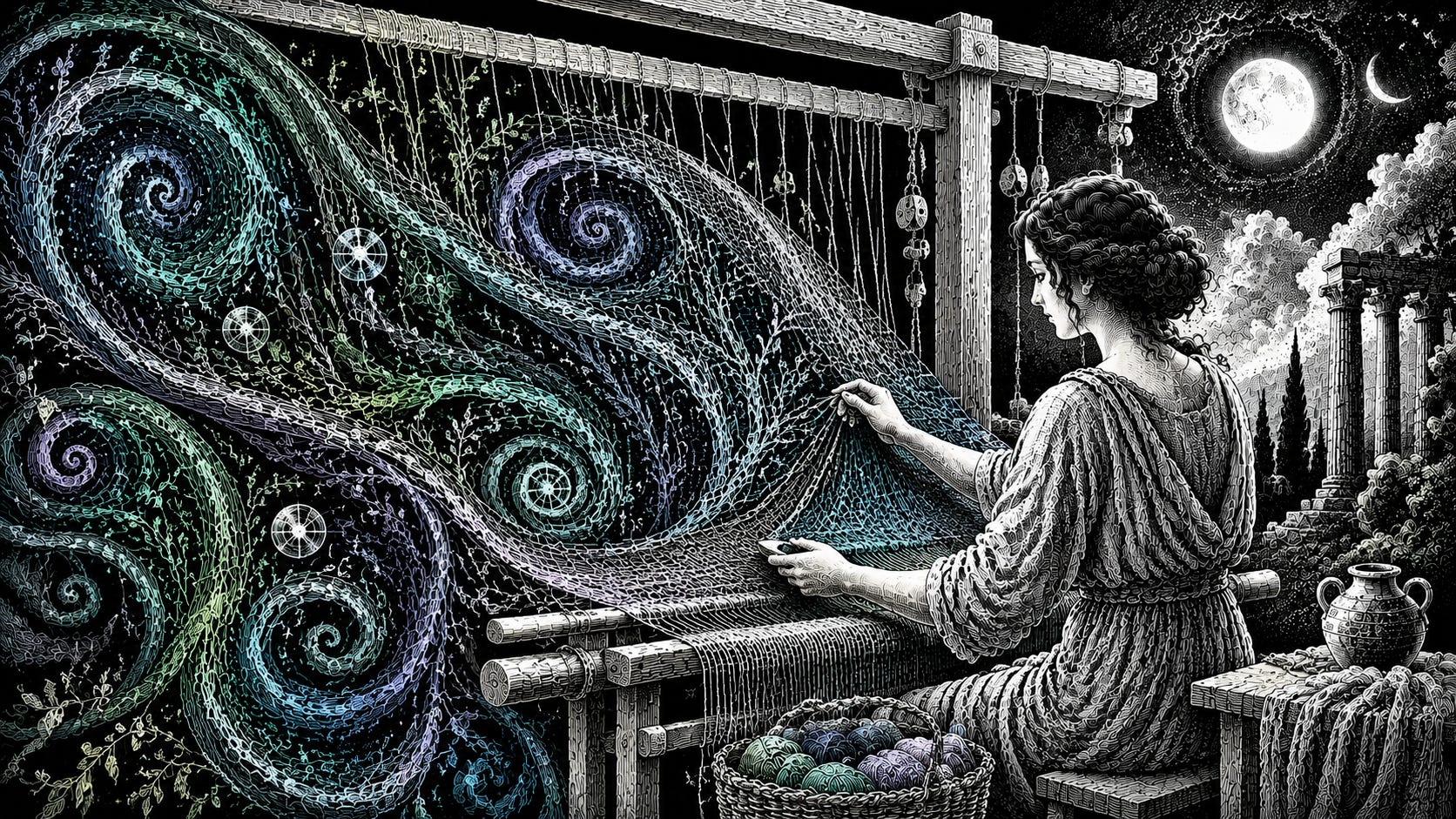
For all is but a woven web of guesses.
I don’t believe you have to be an infallibilist to be a Christian ethicist. Some Christians admit, just like many secular humanists do, that their worldview may be wrong. These Christians, unlike Andrew Wilson, possess the necessary tool for using reason and developing knowledge: continued openness to self-correction.
I’ll conclude with a point in Wilson’s favor: In addition to falsely accusing secular humanists of moral subjectivism, Wilson correctly accuses them of moral arbitrariness. Throughout the interview he points out the unfoundedness of secular humanism’s metaethical preference for human flourishing.
Human flourishing is good, but from a philosophical point of view, what makes it good? Matt Dillahunty fails to answer this in his debate with Wilson (Wilson destroys Dillahunty in this highly entertaining debate). I often hear secular humanists simply posit the goodness of human flourishing as a moral axiom. I agree with Wilson that this is insufficient, and therefore I am not a secular humanist. I am a knowledge maximalist, which I explain in a series of articles linked to in the second paragraph of “Why Pursuing Knowledge Is a Better-than-Chance Moral Bet.” Under knowledge maximalism, human flourishing does have moral value, but not for arbitrary reasons.
Well played! You make some very clear and powerful distinctions here about Wilson's slight of hand.
Then, your final paragraphs bring a different question to the forefront, about the "why" of human flourishing. I was surprised (and delighted) when you wrote that there is a problem with treating it as an axiom... but I must have missed in your past writings where and how you make an argument for it. I actually had the impression previously that you, also, were treating human flourishing as an axiomatic given. Can you explain to me -- or point to where in your writings -- your argument for placing it as the correct moral compass? Thanks!